Judging by the quiet protest held every Thursday evening and Saturday night in Habima Square in Tel Aviv by volunteers from Looking the Occupation in the Eye, one might conclude that the country’s future will be in the hands of Kahanists. The 14, 18 and 22-year-olds among them, some of whom go beyond hurling insults, shout racist and fascist slogans at the demonstrators without understanding what those slogans represent. Their historical ignorance is apparent in virtually everything they say. Listening to them, one gets the impression that Israelis are driven by fear, which pushes them into the arms of the right. This is the right that led to the October 7 massacre. And Netanyahu continues to frighten the public with the Iranian nuclear threat—the very nuclear capability he declared destroyed in June 2025, after the 12-day “Operation Rising Lion”.
Thirty-eight years have passed since the attack on bus 961, approximately 36 hours before the elections to the Twelfth Knesset. Palestinian militants threw Molotov cocktails at a bus near Jericho. Rachel Weiss and her three young children burned to death, as did soldier David Delarosa, who tried to rescue them and later succumbed to his wounds. These were the days of the First Intifada, and the attack was considered the pivotal event that tipped the balance at the last minute against Shimon Peres. The right-wing Likud, led by Yitzhak Shamir, won by a single seat, enabling Shamir to form the next government.
Friday’s attack in Hebron, in which two soldiers were killed, appears at first glance to favor the right-wing government, unlike the 1988 attack. The prime minister is exploiting it for political gain. Having so far failed to persuade Trump to authorize an Israeli attack on Iran, Netanyahu is deploying the IDF in the West Bank and conducting an aggressive, deceitful propaganda campaign ahead of the elections. No one knows what his people may be preparing for election day. Nevertheless, none of this is likely to overturn the polling picture.
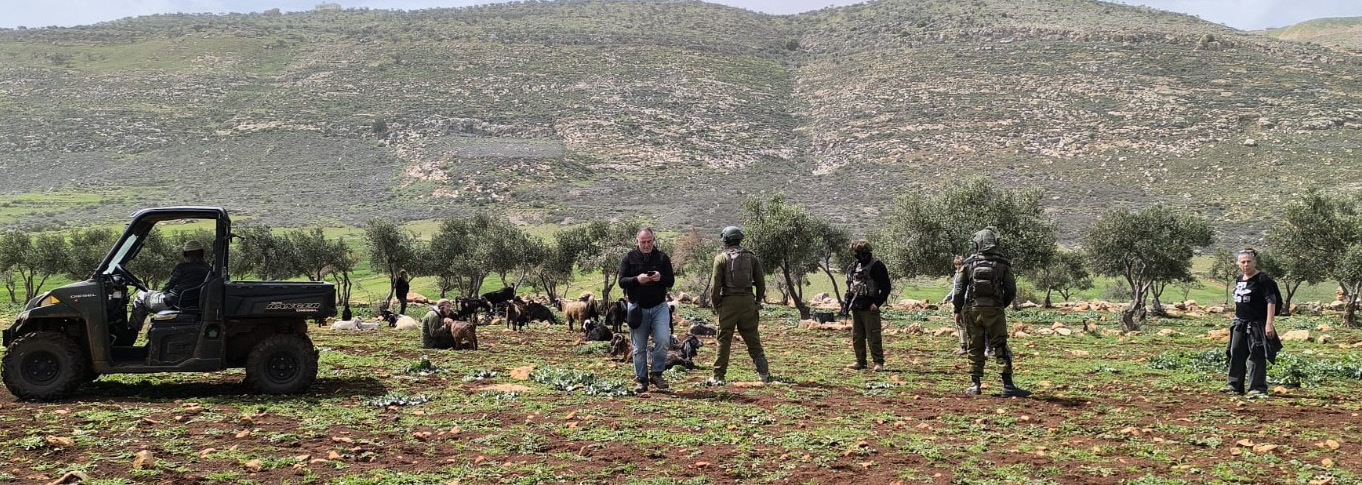
Once it becomes clear that voters intend to remove him from the four official residences maintained at public expense, there is a danger that Netanyahu and his supporters will prepare a countermeasure. He and his associates may use every means at their disposal to neutralize the election results or, at the very least, prolong the tenure of the caretaker government. This was the response of Knesset Speaker Amir Ohana when told that a majority of 61 members seeking to replace him would include Arab MKs: “If they replace the Knesset speaker on the basis of those votes, what is there left to say?” His remarks went unanswered by the media.
Netanyahu and the ruling party benefit from the “neutrality” of the mainstream media, which over the years has largely enabled the assault on democracy and the judicial system, just as it helped create Ben-Gvir four years ago. In its pursuit of ratings, as we have noted here repeatedly, the mainstream media has been reluctant to criticize Netanyahu, and journalists have rarely confronted him. On the contrary, they have broadcast his staged “press conferences” in their entirety. They have made themselves subservient to “objectivity” and to debates framed as “both sides,” ignoring the facts and preferring not to investigate and uncover the truth. They will play into his hands even after the election results are announced.
The prime minister’s struggle to cling to power will not end when the final results are published. He is counting on the leaders of the change bloc, who refuse to cooperate with the Arab parties, being unable to agree on who should receive the mandate to form a government. To break up the change bloc, Netanyahu will play the security card, insisting that the country must “unite.” With the Iranian front blocked off, the West Bank will be the most accessible and politically expedient arena for this strategy. The coalition enjoys the cooperation of an accommodating IDF. Senior officers have emerged from messianic pre-military academies, while others are reluctant to confront the settler leadership or act against soldiers and civilians who perpetrate violence against Palestinians. This situation makes it easier for messianic right-wing activists—who will not accept a transfer of power—to resort to violence and establish new outposts in order to create facts on the ground.
That is why it is of the utmost importance to vote, if only to raise the effective electoral threshold and keep minor right-wing parties out of the Knesset. No less urgent is the need to establish a change government quickly, removing Netanyahu, Smotrich, Ben-Gvir and Katz from office. Their successors will be able to instruct the army, the Shin Bet and the police to bring Jewish terrorism under control. Such a step would create conditions that reduce the risk of war and, over the longer term, bring the occupation to an end and pave the way toward a political settlement that will establish Israel’s borders once and for all.
Sunday – Dozens of white Toyota pickup trucks belonging to settlement security coordinators staged a defiant motorcade through central Tel Aviv. They sounded their sirens and activated their flashing lights in protest against the arrest of one of their colleagues, who is suspected of shooting at Palestinian olive harvesters. These coordinators are paid by the state. They were now using vehicles provided for their official duties to conduct a political protest against the state itself. Will they use the resources entrusted to them when a new government curbs their mobilization for ethnic cleansing in the West Bank?
The European Union condemned the attack on a diplomatic delegation in the Palestinian village of Taybeh in the West Bank. “The European Union strongly condemns the recent attacks perpetrated by violent settlers in the West Bank, including attacks on European diplomats,” an EU spokesperson said. “We welcome statements by several Israeli officials condemning the attacks, but expect accountability.”
France’s Foreign Ministry issued a statement saying: “France calls on the Israeli authorities to arrest those responsible for this serious attack and bring them to justice. The Israeli authorities must take all necessary measures to put an end to these acts of terror and ensure the security of the civilian population and diplomatic missions, as they are required to do under international law.”
Monday – Ten suspects were arrested in connection with violent incidents over the weekend, foremost among them the attack on a European diplomatic delegation and the assault on Washington Post photographer Heidi Levine. An official statement said the arrests involved the Border Police, the Shin Bet security service and the IDF. The forces seized vehicles and evidence linking the suspects to the violence. According to the statement, they also evacuated illegal outposts near Abu Falah and the town of Taybeh, as well as settlers who had invaded a Palestinian home.
It was also reported that settlers tried to set vehicles on fire overnight in the village of Khirbet Safa, north of Hebron. Graffiti sprayed by settlers was documented at the same location. An illegal outpost established near the village of Wadi al-Rahim in the southern Hebron Hills was evacuated overnight by IDF troops and police after settlers set fire to a storage building. Settlers attacked a home in the Al-Ka’abneh Bedouin community east of Taybeh, in the Ramallah area, damaging its contents, stealing money and taking 25 head of cattle.
In the village of Qaryut, a man was shot after settlers entered a horse farm near the village. An IDF unit arriving at the scene used tear gas; reports of live fire followed. In addition, schoolchildren in the village of Jalud were evacuated after settlers were filmed advancing toward the school from the direction of the Shiloh settlement bloc.
Two homes in the village of Turmus Ayya were attacked by settlers. Their residents had been harvesting olives when the assault took place. One Palestinian was struck in the head and taken for medical treatment. Several vehicles and a residential building were also set on fire. The masked attackers fled when soldiers appeared. According to a report, uniformed personnel ordered residents and journalists to leave the attacked homes.
Settlers opened fire and set two vehicles ablaze in Wadi al-Shaer, near Salfit.
Tuesday – Uniformed personnel—police officers and soldiers—provided protection for settlers who stole livestock in the village of Ramon, in the Ramallah area. Two Palestinians were injured overnight in a settler attack in Khirbet al-Nabi, in Masafer Yatta; one was seriously wounded.
Wednesday – Approximately 80 volunteers from Rabbis for Human Rights, who were accompanying farmers during the olive harvest near Nahalin, were detained. Among them was Brad Lander, a Jewish candidate for the US Congress.
The volunteers were harvesting olives when IDF forces arrived and presented an order declaring the area a closed military zone for 24 hours. According to the organization, there had been no way to know about the order in advance. Nevertheless, its members said they would comply and leave the area. The uniformed personnel ignored this and detained those present at a police station to verify their identities and photograph their identity cards and passports.
The IDF said the olive harvest had not been coordinated in advance, even though the order had been imposed in an area where such coordination was not required. Once it emerged that Lander was a congressional candidate, he was released.
Masked settlers fired at Palestinians and vandalized olive trees in the village of Jalud. According to reports, an Israeli security vehicle was seen at the scene.
Three of the suspects in the assault on Washington Post photographer Heidi Levine were released to house arrest, while a fourth was released without conditions. The detention of another suspect, Nadav Cohen Tzemach, was extended until Monday after the suspicions against him strengthened. The suspects accused of attacking the diplomats and public figures from France, Poland and Belgium were also released.
Andrei Khrzhanovsky, a human rights activist who is sharply critical of the occupation and whose English-language videos have attracted considerable attention online, was arrested in the town of Taybeh while helping a Palestinian harvest olives in his own grove. The army presented him with an order issued against him. The uniformed personnel also presented an order declaring the area a closed military zone.
Friday – IDF soldiers Ron Yonatan Roytman, 23, from Ashkelon, and Yuval Shai Svilem, 20, from Hod Hasharon, were killed in the attack in Hebron. In response, the Civil Administration demolished Palestinian structures near the scene of the attack, on the orders of Minister Smotrich. Defense Minister Katz did not miss the opportunity to capitalize on the incident. His office announced that eviction orders had been issued for the entire neighborhood in preparation for its complete demolition, “before the Sabbath begins.”
Following the attack, the IDF announced a military operation in the Hebron area expected to last several days and to include the displacement of residents from their homes. Troops entered the city during the night. Residents were instructed over loudspeakers to leave hundreds of homes that were to be searched. The operation targeted approximately 1,000 members of the families of those who carried out the attack. Arrests and security checks were reported. Hebron Municipality said 250 families had been ordered to leave their homes and were permitted to take only a small amount of belongings.
The neighboring town of Halhul was also included in the operation, with more than 50 military vehicles entering the town. Raids and arrests were also reported in Nablus, Tubas, Qalqilya, Tekoa and Burqin. Settlers injured Palestinian farmers west of Hebron. Attacks were also reported against olive harvesters near Beit Iksa, south of Ramallah, and on the outskirts of the village of Sinjil.
In Burin, a confrontation broke out between Palestinians and settlers. Residents damaged the intruders’ ATVs and lightly injured three settlers. Reinforced army units and additional settlers arrived in the village.
An indictment was filed against Pinhas Shem Tov Ran, from the settlement of Itamar, who serves as a settlement security coordinator at the Gidonim Ridge outpost. He is accused of shooting at a Palestinian vehicle in Aqraba and seriously injuring an 18-year-old woman who was traveling in it. The indictment further alleges that Ran, 37, attempted to tamper with evidence when he returned to the scene. It also states that he stopped passersby and checked their identity documents without legal authority.
According to the indictment, when a vehicle carrying a couple approached, Ran called on the driver to stop. The driver noticed that the men were not soldiers and that one of the occupants of the off-road vehicle was masked. Fearing for his safety, he refused to stop and accelerated. “In response, Ran drew his weapon and fired at least three shots at the departing vehicle, intending to hit the vehicle and its occupants. Two bullets struck the vehicle and the woman sitting beside the driver.” Ran is the son of Avri Ran, known as the “father of the outposts.”
Za’atra (Tapuach) Junction: As a protest and solidarity shift by Looking the Occupation in the Eye activists was ending, a young settler attacked one of the activists, snatched his Palestinian-flag-colored head covering and bag, and broke the stool he had been sitting on. An officer and a soldier standing very nearby did nothing. A police officer who arrived separated the two men and recorded the settler’s details.
Saturday – Tens of thousands gathered in the evening at Hostages Square in Tel Aviv for the last major rally before the elections. Family members of hostages who were murdered and former hostages who had been released from captivity addressed the crowd. Activists from Looking the Occupation in the Eye and other peace organizations held signs reading: “Arabs and Jews will only win together.”
Palestinian reports said that more than 1,500 Palestinians had been displaced from their homes in Hebron and that many houses had been demolished. Meanwhile, the army took control of other homes for use by soldiers carrying out their missions.
Settlers injured a Palestinian harvesting olives in Ein Arik, near Ramallah.
This Week in Khirbet a-Tawil – The abandonment of the minors from the Jackson outpost continues. This week, a single minor was documented being left alone in the field.
Benayahu Ben Shabbat, accompanied by a female friend and another male friend, was filmed opening a water cistern on land owned by a Palestinian family and drawing water from it.
The owner of a nearby farm arrived at an olive grove belonging to a resident of a-Tawil and threatened to prevent him from harvesting because activists had come to assist with the olive picking. An army unit arrived and drove both the landowner and the activists away. The owner was forced to abandon the harvest.