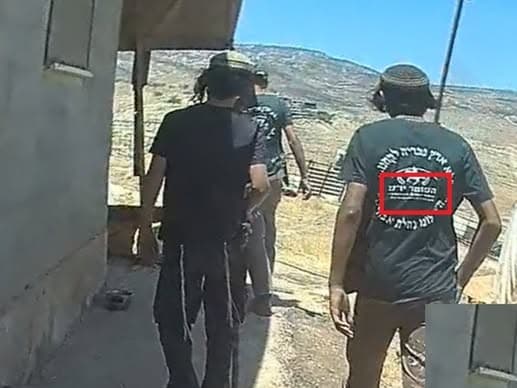



The events of the past weekend in the village of Tell and throughout the West Bank demonstrate that it is impossible to ignore the growing perception among Palestinians living under occupation that the prospect of a political solution has been blocked. The assumption that the conflict can simply be "managed," while priority is given to repairing the internal destruction caused by Netanyahu's government of malice and failure, is an illusion. Among Palestinians, despair, humiliation, and the loss of faith in the possibility of change through nonviolent means continue to accumulate. October 7 proved that attempting to manage a conflict without offering a political horizon ultimately leads to an explosion.
Conflict management is a one-sided game that ignores the interests and aspirations of the other side. Eisenkot, Bennett, Lieberman, and Golan must address the Palestinian issue while taking into account what is happening in the occupied territories. First and foremost, they must recognize that the occupation is the fundamental problem, and that addressing it will make it possible to repair the damage in all other areas. This does not imply an immediate solution, but rather the creation of a credible process leading toward one, culminating in Palestinian self-determination in an independent state while guaranteeing the complete security of the State of Israel. Eisenkot's statement to Ynet—"No Palestinian state, and no path to a Palestinian state"—offers no grounds for hope.
Nor should it be ignored that elections will also take place within the Palestinian Authority. Israel's interest should be to strengthen candidates who support a political settlement and reject violence. The Netanyahu–Smotrich government has done everything possible to draw a curtain over any prospect of political negotiations. The parties presenting themselves as an alternative must reverse course completely. Doing so would also strengthen moderate candidates in the Palestinian elections. Furthermore, the events of the past weekend point to a dangerous trend: a growing willingness among Palestinians to resist settlers entering their villages. As many have observed, "the barrier of fear among Palestinians has been broken," and already last week the word Intifada reappeared in public discourse.
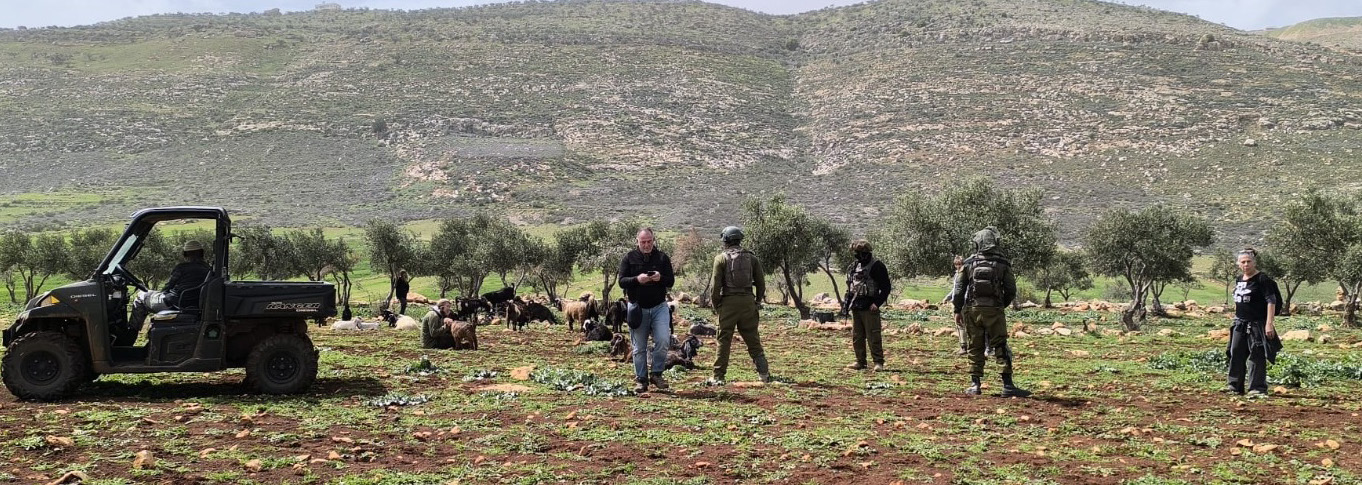
At the same time, the next government must immediately halt the flow of public funds to the settlement enterprise through the various channels that Smotrich has used to divert hundreds of millions of shekels. It must restore law and order throughout the West Bank by dismantling the illegal outposts and farms established in recent years, protecting the Palestinian population, returning communities that were displaced through what many describe as ethnic cleansing, and dismantling the anarchic groups that have emerged in the West Bank over the past four years.
Sunday
Settlers blocked roads and vandalized Palestinian vehicles throughout the occupied territories. During the night they set fire to a mosque in the village of Qusra, south of Nablus, and to cars in the village of Beitillu, northwest of Ramallah. In Beit Furik, settlers attempted to set fire to a family home while its occupants were inside. Another mosque was torched in the village of Kafr ad-Dik (Khur), and heavy machinery was set ablaze at the Ein Samia quarry.
Major General Avi Bluth, Commander of the Central Command, ordered that Palestinians would not be allowed to enter Israeli settlements in the West Bank in the coming days.
According to an assessment reported by military correspondent Roi Sharon, Major Yuval Ezra, who was killed in the village of Tell, was apparently struck by friendly fire rather than by gunfire from residents of the village under attack.
Ahead of Netanyahu's visit to Washington, approximately 600 former senior officials from the Israel Defense Forces, the Mossad, the Shin Bet, and the Foreign Ministry sent what they described as an "urgent appeal" to the President of the United States. They urged him to intervene immediately to halt "the terrorist activities of Jewish settlers" in the West Bank, warning that they could soon lead to consequences "even more catastrophic than the Hamas atrocities of October 7 and their multi-front repercussions." At the same time, after months of delay, Israel's Security Cabinet approved allowing the International Peace Council to enter Gaza.
Monday
According to figures released by Israel's security establishment, 30 incidents of nationalist crime were recorded over the weekend in the occupied territories. During the first half of 2026, nationalist crimes increased by 63 percent compared with the second half of 2025. A total of 660 incidents were documented between January and June 2026, including 45 deliberate attacks against Israeli security forces. Six Palestinians were killed and 140 were injured as a result of nationalist violence during that period.
The siege imposed around the Nablus area had severe humanitarian consequences. A pregnant woman on her way to a hospital in Nablus lost her unborn child after the ambulance transporting her was delayed for inspection at the Awarta checkpoint. Palestinian medical organizations and Physicians for Human Rights stated that the closure of Nablus is severely restricting residents' access to healthcare and emergency medical services located in the city.
During the night, settlers set fire to a truck and equipment in the industrial zone of the town of Beita, south of Nablus. Two additional illegal outposts were established near the village of Tell, bringing the number of new outposts erected in the area over recent days to eight.
Israeli soldiers were filmed vandalizing Palestinian vehicles in Bethlehem.
Tuesday – The High Court in the Service of the Occupation
Once again, Israel's High Court of Justice demonstrated its willingness to uphold the occupation.
"It clothes violence in judicial robes, assigns injustice a case number, and signs its name at the bottom of the page as though justice has been done. This is not the rule of law; it is the rule of occupation through law." These words were written by Katy Bar of Mothers Against Violence in response to the Court's ruling in Case 50056-5-2025, Ra'ed Khalil Jaber Hamamdeh v. The Military Commander in the West Bank.
The petition challenged the military authorities' refusal to grant planning and building permits for land in Masafer Yatta, located on the edge of a military firing zone, where the petitioners have lived for decades and where demolition orders have been issued against their homes.
Justice David Mintz argued that describing the petitioners' situation as "exceptional" because their homes lie on the edge of the firing zone—where only "dry" military exercises take place—does not alter the legal outcome. In fact, he warned that recognizing such an exception could eventually turn it into the rule. His legal analysis ignored the fact that the petitioners have resided there since the previous century.
Justice Daphne Barak-Erez, by contrast, noted that the petitioners had long been recognized as permanent residents of the area and wrote that "there is no basis for concluding that their presence and residence in the area have been unlawful."
Presiding over the panel was Deputy President of the Supreme Court Noam Sohlberg, himself a resident of an Israeli settlement. In his view, the distinction between the petitioners' physical presence on the land in recent years and the legal recognition of permanent residence within the firing zone justified dismissing the petition. Summing up, he wrote: "Thus, the claim of permanent residence throughout the firing zone has been rejected."
The Israeli military demolished a family home in Shuqba, another house in Deir Razih near Hebron, and additional structures in Ein al-Hilweh in the Jordan Valley. Meanwhile, settlers from the illegal Armonot Farm outpost continued demolishing Palestinian property near Jericho.
Hundreds of demonstrators gathered at Habima Square in Tel Aviv to protest the escalation of settler violence. As on previous occasions, police used force against the protesters.
The Kahanist party "Complete and Strong Jewish Israel," led by Michael Ben-Ari and Baruch Marzel, was officially registered after Shin Bet Director David Zini withdrew the agency's objection. Petitions have since been filed challenging the decision that allows the party to contest the upcoming Knesset elections.
Wednesday
Major General Avi Bluth, Commander of the Central Command, signed 15 military seizure orders authorizing the confiscation of land in Area A in order to build a road linking the newly established settlements of Noa and Emek Dotan. The planned route will bypass the Palestinian town of Qabatiya.
Thursday – Another Step Toward an Arrangement in Gaza
An agreement was reportedly reached under which Hamas would disarm and Gaza would be governed by a new Palestinian administration. According to Egyptian sources, the plan includes an Israeli commitment to cease all military operations and withdraw from the Gaza Strip.
Under the agreement, all Palestinian armed groups would surrender their weapons, while tunnels and military production facilities would be placed under international supervision. Responsibility for all civilian and security affairs in Gaza would be transferred to a National Committee for the Administration of the Strip. Militias identified with Israel would be dismantled, and an international force would monitor the ceasefire. The expected declaration of the agreement reportedly includes a 15-point roadmap.
Hamas stated: "Israel's commitment to end the killing and cease its aggression is the foundation and the first step toward implementation and toward establishing the framework and timetable for what has been agreed. It should be emphasized that implementation of the second phase of the agreement depends on Israel's commitment to implement all the provisions of the first phase."
The Prime Minister's Office responded: "Regarding various reports of diplomatic progress concerning Gaza, Israel reiterates that there will be no withdrawal of IDF forces from the current Yellow Line without the genuine disarmament of Hamas."
Israeli soldiers shot and wounded a 59-year-old Palestinian driver in the village of Beita, near Nablus. According to the IDF, the driver accelerated toward soldiers and posed an immediate threat.
Friday
A Palestinian man was wounded by Israeli gunfire in the al-Junayd area. According to the military, settlers entered the outskirts of Nablus under IDF escort, after which Palestinians threw stones at them.
Settlers, accompanied by Israeli soldiers, entered the village of Tell, between Nablus and Yitzhar, where, the previous Saturday, an Israeli officer, the security coordinator of Havat Gilad, and four Palestinians had been killed.
Settlers grazed their livestock on privately owned Palestinian land in Khirbet Khallat Hummus, north of the Susiya military base in the South Hebron Hills, and assaulted a Palestinian family with pepper spray. When soldiers arrived, they arrested three members of the Palestinian family rather than the attackers.
Dozens of Israeli civilians attacked the village of Surif, near Bethlehem. They set fire to buildings and vehicles and assaulted Palestinian residents with clubs and tear gas. Two local residents sustained minor injuries.
Saturday
A 19-year-old Israeli soldier, who lives in a settlement in the West Bank, was arrested on suspicion of shooting a Palestinian child the previous day near the village of al-Mughayyir, northeast of Ramallah. The child was shot in the back during a settler incursion into the village.