


Since the brutal terrorist attack of October 7, 2023, we have learned that the Israeli-Palestinian conflict cannot be ignored. This conclusion has been reflected on this website for a long time, and Israel’s standing abroad—above all the profound change in the United States—makes clear that the country must provide a clear answer to the question of what future it envisions for Gaza and the West Bank.
The position of the government of perpetual war is well known. But the opposition parties that present themselves as an alternative are not offering an alternative plan either. To the extent that they address the issue, they criticize the Netanyahu government over the way it is conducting the war while ignoring the fact that this is fundamentally a political issue.
At the beginning of the week, Netanyahu rejected the Peace Council’s 15-point plan for resolving the Gaza issue. The opposition parties chose to remain silent. Clearly, they agree that Hamas must be dismantled as a military entity, but they ignore the fact that the plan addresses additional questions: Who will govern the Gaza Strip? Who will rebuild it? Who will guarantee the security of its residents? What will the relationship between Gaza and the West Bank be?
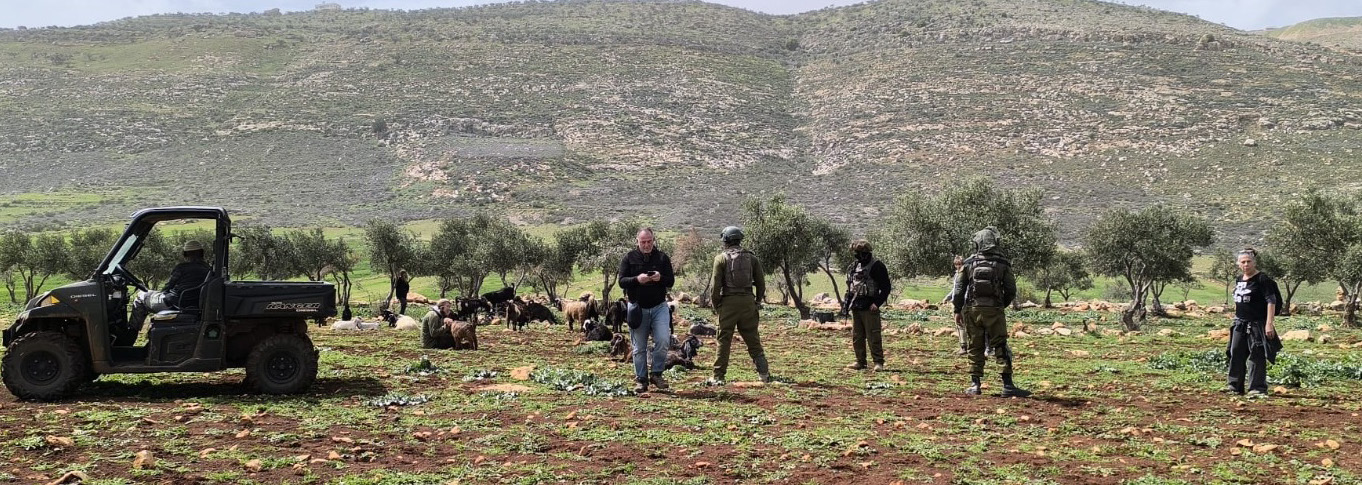
They take the same approach of ignoring the central issue with regard to the occupied West Bank. The question of what Israel’s response should be toward the Palestinians—Annexation (including apartheid)? Two states? Or continued control under the existing circumstances?—is not being debated. The settlers’ takeover of policy in Judea and Samaria, and the army’s cooperation with them, both at the macro and micro levels—as in the case of the siege in Qusra—do not prompt their leaders to respond. Eisenkot and Bennett maintain their silence. It appears that they prefer the Palestinian issue not to be present in the election campaign. Instead, they have chosen to talk about the loss of governance.
The owner of one of the homes in Qusra is a Palestinian-American who lives across the ocean. Media coverage there has been more extensive than usual, so it is hardly surprising that the U.S. ambassador to Israel, Mike Huckabee, stated that “the IDF and police came at our request to remove the Israeli terrorists from the area.” The dismantling of the outposts in Qusra and Jalud and the lifting of the siege on the homes in Qusra began on Wednesday. A Golani infantry battalion and Border Police officers were brought into the area. Yet despite the presence of large numbers of military personnel, settlers continued to roam the area, inside a zone declared a closed military area (that was the justification used to block dozens of protesters who arrived in Qusra on Friday). The settlers continued to harass Palestinian residents and prevented the Qusra municipality from reconnecting the water pipe that they had sabotaged.
In Khirbet al-Tawil, where activists from “Looking the Occupation in the Eye” maintain a protective presence, minors who came from “Jackson’s Farm” attacked the activists with pepper spray and beat them with sticks on Friday and Saturday. Near Beit Sahour, settlers fired live ammunition at activists from "Combatants for Peace".
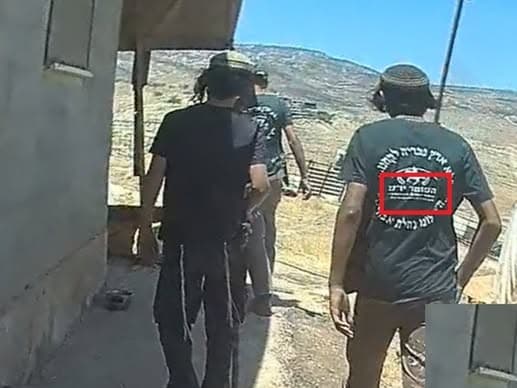
Sunday – Settlers established a tiny outpost—a shade shelter—in the yard of a house in the village of Qusra, south of Nablus. Their aim was to block access to the house, and they piled rocks along the access road. They disconnected the main electricity supply cables as well as those coming from the solar panels, and also cut off the water supply. Two families are under siege in homes located in Area B, one of them with two young daughters. Soldiers who were present at the site joined the settlers in prayer.
The village of Qusra and its residents have been under attack for months. Three activists from “Looking the Occupation in the Eye” have been attacked there, two of whom were seriously injured and hospitalized. A few weeks ago, settlers blocked the access roads to the home of a family in the village of Jalud, forcing its residents to abandon it.
Settlers paved an unauthorized road from the Gitit junction to “Jackson’s Farm” on the outskirts of Aqraba. The IDF spokesperson responded: “A few days ago, a report was received concerning Israeli civilians who had paved a road in violation of the law in the Khirbet al-Tawil area of the Samaria Brigade. Since the work there was illegal, demolition work was carried out several days later.” Factually, the road was not demolished.
Acts of vandalism, provocation and sabotage were carried out by settlers around the homes of the Abu Faza’a family in Karmelo, east of Taybeh in the Ramallah area. The area is a closed military zone. Activists were present to protect the community. Police officers who arrived in the evening arrested the activists, handcuffed them, confiscated their phones and body cameras, and transferred them to the Samaria Police. The detainees are to be charged with violating the military order.
A weapons cache was discovered over the weekend at the “Kol Dodi” outpost near the settlement of Kokhav HaShahar. Suspects were arrested.
At a cabinet meeting, Netanyahu spoke about the Gaza Strip: “Israel rejects the Peace Council’s 15-point plan.” He said Israel would not withdraw from the Strip before Hamas is disarmed—“the heavy weapons, the less heavy weapons, all the weapons.”
Monday – The settlers’ siege of the homes in Qusra, where the two families are trapped, continued. Nurit Yohanan of Times of Israel reported that she spoke with the father, who said that their food was expected to run out that day and that one of his daughters needed medical attention. During the night, soldiers and settlers were documented blocking an ambulance that was attempting to reach the house. The settlers blocked it with Ranger vehicles, a “Smotrich gift.”
For about two hours, settlers blocked a vehicle carrying Haaretz reporter Matan Golan and photographer Itai Ron to the besieged homes, and attacked the two journalists. Soldiers who arrived at the scene refused to assist the journalists. The army announced that the area was a closed military zone but refrained from taking action against the settlers who were violating the order.
Settlers attacked the Bedouin community of Arab al-Kaabneh east of the village of al-Taybeh, east of Ramallah, beating local residents, including children, as well as international solidarity activists. Soldiers cooperated with them.
Central Command chief Major General Avi Blot issued an administrative order barring Tal Yinon Dardik, a settler suspected of violence against Palestinians, from the area. Dardik had previously been visited by the defense minister in the detention cell where he had been placed for violating an earlier order. The general became embroiled in a confrontation with the defense minister, who fired him on Channel 14 and later reversed the decision. Under the order, and as an alternative to detention, Dardik will be required to report to a police station in Modi’in Illit twice a day.
Tuesday – The siege in Qusra continued. Members of the besieged families could not leave their homes for fear of being attacked. At the end of the day, an ambulance was allowed into the compound under military escort. It evacuated the girl who needed medical treatment and brought in a small amount of supplies.
A group of settlers broke into the home of Palestinian residents in the al-Minya–al-Juran area, attacked them, stole sheep and vehicles, and caused extensive damage to the house. During the incident, the army arrived and soldiers arrested six residents, who were subsequently released. The six were arrested again at the end of the week.
Wednesday – After days of ignoring the situation and amid growing criticism, uniformed personnel arrived with the aim of removing the settlers who were besieging the homes of two Palestinian families in Qusra. The Central Command chief also arrived at the site. In response, additional settlers came to the area and blocked access roads with boulders to prevent the army from removing the occupants of the small outpost erected near the residents’ homes. The settlers confronted the soldiers, and after some time the army left Qusra. Apparently as a result, the IDF chief of staff ordered an additional regular army battalion to reinforce the area of the village near Nablus.
One of the besieged residents was quoted by journalists as saying: “The settlers are walking around freely here, around the houses. Now they are banging on the doors. We have no water and not much food, and we cannot leave the house. We are begging the whole world to get us out of this nightmare.”
The Abu Faza’a family homes, east of Taybeh, were attacked overnight, between Wednesday and Thursday, by a large group of settlers who attempted to break in.
In the Jenin area, the Civil Administration demolished Palestinian homes to make room for new settlements.
A group of settlers attacked a resident’s home in the Dar Nakhala area, within the Etzion Brigade’s jurisdiction, in the evening, and cut off the home’s water supply. When the residents attempted to repair the water line, the settlers attacked and beat them, and one resident was injured and taken to a hospital in Bethlehem. Army and police forces subsequently arrived and arrested the homeowner.
Thursday – During the night, Border Police officers and Civil Administration inspectors raided three illegal outposts: Tel Talpiyot in Samaria, whose activists harass the villages of Jalud, Qusra, Qaryut and Jurish; an outpost near the settlement of Esh Kodesh, which they demolished; and the “Or Binyamin” outpost overlooking the eastern side of Wadi al-Zarqa, where uniformed personnel demolished the house, chicken coop and water tanks. Settler websites described the action by the authorities as: “Brutal destruction in Benjamin and Samaria: homes demolished, water tanks destroyed—large quantities of equipment confiscated.”
In the morning, an IDF and Border Police force arrived in Qusra to remove the outpost opposite the besieged homes, following their withdrawal the previous day. At the same time, security forces deployed near the home of the Tubassi family in Jalud, which settlers had taken over three weeks earlier.
But the IDF did not change its ways. The army stated: “IDF forces are positioning themselves in homes in the village in order to protect the residents, including one of the Palestinian homes allegedly under siege, in order to protect them.” In practice, hundreds of soldiers imposed a lockdown on the entire village. The mayor was instructed to close clinics and shops, and in the area of the besieged homes families were being evacuated and told to pack for several days. Following a protest, the IDF reversed the decision. Central Command chief Avi Blot instructed that forces enter only unoccupied homes. Even after the settlers’ small outpost was removed, they continued to remain in the vicinity of the besieged homes.
Activists from "Looking the Occupation in the Eye” who were holding their weekly peaceful protest in Habima Square in Tel Aviv in the evening, were attacked by young hooligans, and a confrontation broke out between the two sides. Police were called and removed the attackers, some of whom were minors.
Friday – The shade shelter of the settlers’ small outpost in Qusra, which the army had dismantled 24 hours earlier, was rebuilt. The lawbreakers continued to roam around the compound of the homes on the outskirts of the village. In the morning, dozens of solidarity activists arrived. Border Police officers stationed there prevented the activists from entering the besieged home, citing the “closed military zone” order, and expelled them from the area. The food, medicines and water the activists had brought were taken into the building after “inspection.” With the assistance of MK Ofer Cassif, equipment for repairing the damaged water pipeline was also brought in. The settlers who were present at the site hid while the activists were there.
On the outskirts of Beit Sahour, near Bethlehem, settlers fired at "Combatants for Peace" activists who had arrived at the home of a Palestinian family that settlers had taken over. The activists were using a grinder to cut through a Star of David-shaped metal structure that had been installed on the roof when the shots were fired. “There were about ten armed settlers there, carrying long guns. The army arrived after 20 minutes and, of course, evacuated us from the area.”
Khirbet al-Tawil: Settler minors broke into the madafa (guest room) used by “Looking the Occupation in the Eye” activists and sprayed two activists with pepper spray. The youths then continued harassing those present.
Saturday – The settlers’ “commando unit”—minors who were probably not even old enough for a bar mitzvah—again harassed the activists maintaining a protective presence in Khirbet al-Tawil. They spat at them, beat them with sticks and sprayed them with pepper spray. No police force appeared to be present despite having been called.
An excavator belonging to the Qusra municipality arrived to repair the pipeline destroyed by the settlers, in an effort to reconnect the besieged homes to the water network. It was attacked by a large number of settlers, and the tractor driver was forced to flee the scene. Soldiers were present but did nothing.
Settlers shot Muhammad Matawar, a nurse by profession, in the village of Sa’ir near Hebron. According to reports in the Palestinian media, he was shot in the back.
In Umm al-Khair in Masafer Yatta, settlers accompanied by their herd entered the yard and vegetable garden of a Palestinian family. The army stood by and did nothing.